Understanding the Classes of Dangerous Goods: A Complete Guide
 Athenatus Ricky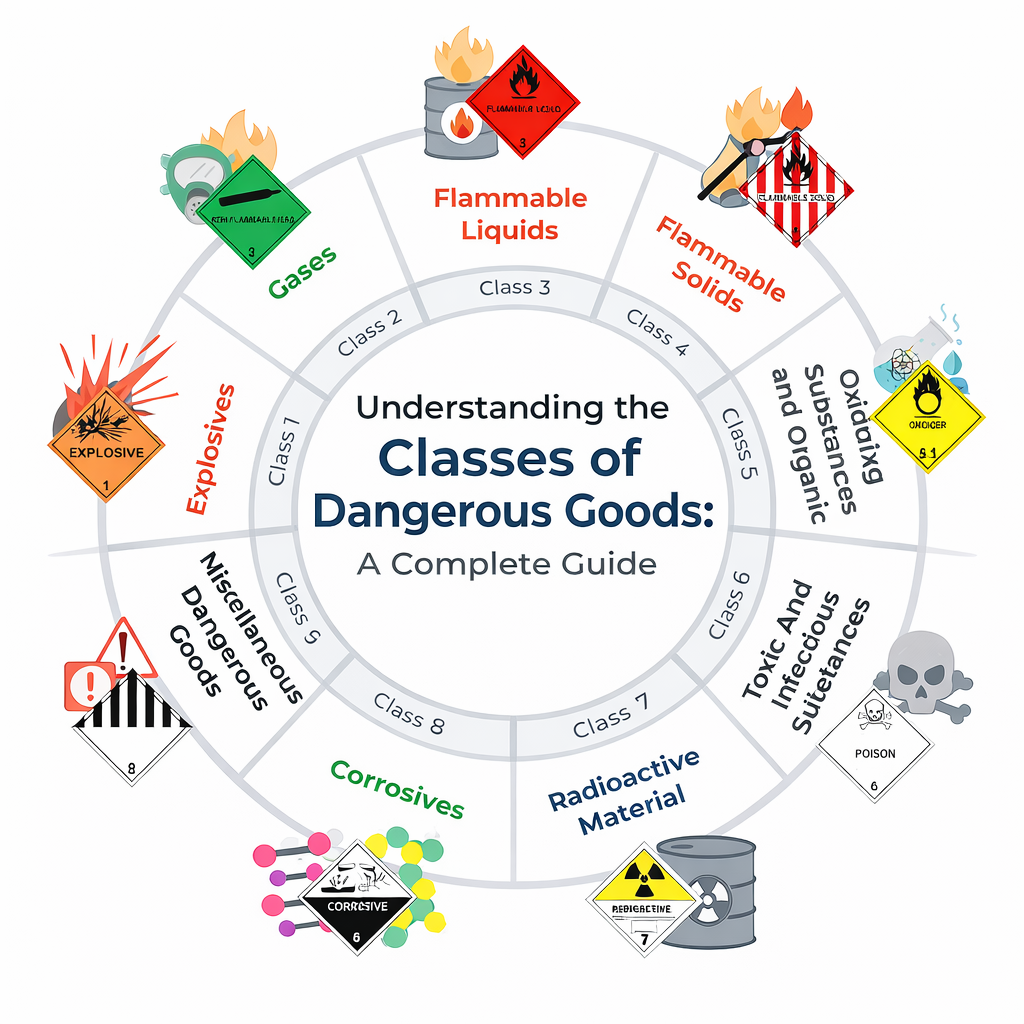
Dangerous goods are substances or materials that can pose a significant risk to health, safety, property, or the environment. From industrial chemicals to everyday household items, understanding how to classify and handle these materials is critical for workplace safety and regulatory compliance. The proper identification and categorization of dangerous goods are guided by internationally recognized standards, such as the UN Model Regulations and ADR/RID guidelines.
This blog explores the 9 classes of dangerous goods, breaking down the risks, examples, and safety measures for each class. Whether you’re a safety professional, logistics worker, or someone interested in chemical safety, this guide provides a comprehensive look at dangerous goods management. The 9 classes are:
Class 1 – Explosives
Class 2 – Gases
Class 3 – Flammable Liquids
Class 4 – Flammable Solids
Class 5 – Oxidizing Substances & Organic Peroxides
Class 6 – Toxic & Infectious Substances
Class 7 – Radioactive Materials
Class 8 – Corrosive Substances
Class 9 – Miscellaneous Dangerous Goods
Class 1: Explosives
Overview:
Class 1 substances are materials that can undergo a sudden chemical reaction producing gas, heat, and pressure, potentially causing damage to people, property, or the environment. Explosives are divided into divisions based on the type and magnitude of the hazard, ranging from mass explosions to minor fire hazards.
Divisions within Class 1:
1.1 – Mass Explosion Hazard: Explosives that can explode as a whole. Example: TNT, dynamite.
1.2 – Projection Hazard: Explosives that may not detonate all at once but can project fragments. Example: Some grenades.
1.3 – Fire Hazard: Explosives with fire risks but not mass explosion hazards. Example: Certain propellants.
1.4 – Minor Explosion Hazard: Small explosives with limited risk. Example: Fireworks.
1.5 – Very Insensitive Explosives: Extremely insensitive explosives with mass explosion risk minimal.
1.6 – Extremely Insensitive Explosives: Explosives so insensitive they virtually cannot explode.
Examples of Class 1 Materials:
▪️ Industrial explosives: TNT, dynamite, ammonium nitrate-based explosives
▪️ Pyrotechnics: Fireworks, flares
▪️ Ammunition and military explosives
Safety Measures:
▪️ Store away from heat, sparks, and friction
▪️ Use proper packaging and labeling as per UN regulations
▪️ Train personnel in handling and emergency response
Class 1 materials require the highest level of safety and regulatory compliance due to their destructive potential.
Class 2: Gases
Overview:
Class 2 substances are gaseous materials that can pose risks due to flammability, toxicity, or pressure. Gases may be compressed, liquefied, or dissolved under pressure, and improper handling can lead to explosions, fires, or health hazards. Class 2 is divided into three main divisions based on the type of hazard.
Divisions within Class 2:
2.1 – Flammable Gases: Gases that ignite easily in the presence of an ignition source.
▪️Examples: Propane, Butane, Acetylene
▪️Hazards: Can cause fires or explosions if leaked into confined spaces.
2.2 – Non-Flammable, Non-Toxic Gases: Gases that are not combustible and do not pose toxic risks but may cause pressure hazards.
▪️Examples: Nitrogen, Helium, Carbon Dioxide
▪️Hazards: Can cause asphyxiation in confined spaces by displacing oxygen or explode if containers rupture.
2.3 – Toxic Gases: Gases that can cause serious health hazards or death if inhaled.
▪️Examples: Chlorine, Hydrogen Sulfide, Phosgene
▪️Hazards: Highly poisonous; even small leaks can be fatal.
Examples of Class 2 Materials:
▪️Industrial gases used in welding, medical applications, and refrigeration
▪️Fire suppression gases (e.g., CO₂)
▪️Toxic gases for chemical manufacturing
Safety Measures:
▪️Store cylinders upright and secured to prevent falling
▪️Keep away from heat, sparks, and flames
▪️Use proper ventilation in storage and handling areas
▪️Train staff in gas leak detection, emergency response, and PPE usage
▪️Follow labeling and transportation regulations (UN number, hazard labels)
Class 2 gases may appear harmless, especially non-toxic gases, but pressure and flammability risks make proper handling critical. Even small leaks can escalate quickly if ignored.
Class 3: Flammable Liquids
Overview:
Class 3 materials are liquid substances that can easily ignite and burn rapidly when exposed to a source of ignition. Flammable liquids are common in industrial, commercial, and even household settings, making awareness and proper handling essential. The primary hazard is fire, which can spread quickly and cause explosions if vapors accumulate in confined spaces.
Key Characteristics of Flammable Liquids:
▪️Have a low flash point (temperature at which vapors ignite)
▪️Produce flammable vapors that can travel and ignite at a distance
▪️Can react violently with incompatible chemicals
Examples of Class 3 Materials:
▪️Gasoline, diesel, kerosene
▪️Alcohols (ethanol, methanol, isopropyl alcohol)
▪️Paint thinners, acetone, and certain industrial solvents
Hazards:
▪️Fire and explosion risk if vapors are ignited
▪️Health hazards from inhalation of toxic vapors (some solvents)
▪️Environmental hazards in case of spills
Safety Measures:
▪️Store in well-ventilated areas away from heat and ignition sources
▪️Use approved containers and follow labeling regulations (UN numbers, hazard symbols)
▪️Avoid smoking or using sparks near flammable liquids
▪️Use proper PPE: gloves, goggles, and flame-resistant clothing when handling large quantities
▪️Have fire extinguishers and spill containment measures readily available
Transportation Considerations:
Flammable liquids must be transported according to strict regulations. Vehicles should be marked with Class 3 hazard labels, and drivers should follow guidelines for packaging, segregation, and emergency response.
Class 3 substances may seem commonplace, but their rapid ignition potential makes them highly dangerous if safety precautions are ignored.
Class 4: Flammable Solids
Overview:
Class 4 materials are solids that can easily ignite through friction, heat, or contact with moisture. Unlike flammable liquids, these substances can catch fire spontaneously or react violently with water. Class 4 is divided into three divisions, each representing a different type of hazard.
Divisions within Class 4:
4.1 – Flammable Solids: Substances that ignite easily through friction or minor heat.
▪️Examples: Sulfur, Phosphorus, Magnesium
▪️Hazards: Can start fires if handled roughly or stored improperly.
4.2 – Substances Liable to Spontaneous Combustion: Materials that can ignite spontaneously in air or under certain conditions.
▪️Examples: Charcoal, oily rags, some metal powders
▪️Hazards: Fire can start without an external ignition source, especially if stored in poorly ventilated areas.
4.3 – Substances That React Dangerously with Water: Solids that release flammable gases when in contact with water.
▪️Examples: Sodium, Potassium, Calcium carbide
▪️Hazards: Contact with water can cause fires or explosions, making handling extremely hazardous.
Safety Measures:
▪️Store flammable solids in cool, dry, well-ventilated areas
▪️Keep materials away from water, moisture, and incompatible substances
▪️Use appropriate containers and follow labeling regulations
▪️Train staff in safe handling, fire prevention, and emergency response
▪️Avoid friction, impact, or excessive heat during handling and transportation
Transportation Considerations:
Flammable solids require special packaging and labeling to prevent accidental ignition. Drivers and handlers must be aware of their unique hazards, especially when transporting water-reactive substances.
Class 4 materials may not be as commonly recognized as flammable liquids or gases, but their ability to ignite spontaneously or react violently with water makes them highly dangerous in industrial and storage settings.
Class 5: Oxidizing Substances & Organic Peroxides
Overview:
Class 5 substances are chemicals that release oxygen or promote combustion, making fires more intense and difficult to control. They do not necessarily burn themselves, but they can cause or accelerate the burning of other materials. This class is divided into two divisions: oxidizing substances and organic peroxides.
Divisions within Class 5:
5.1 – Oxidizing Substances: Chemicals that can increase the risk of fire when in contact with flammable or combustible materials.
▪️Examples: Potassium nitrate, Sodium nitrate, Ammonium perchlorate
▪️Hazards: Can intensify fires, cause explosions if mixed with combustible materials, and react violently with reducing agents.
5.2 – Organic Peroxides: Compounds containing oxygen-oxygen bonds that are unstable and can decompose violently, causing fire or explosion.
▪️Examples: Benzoyl peroxide, Methyl ethyl ketone peroxide (MEKP)
▪️Hazards: Highly reactive, sensitive to heat, friction, and contamination. Can cause fires or release toxic gases.
Examples of Class 5 Materials:
▪️Fertilizers containing oxidizing agents
▪️Bleaching powders and disinfectants
▪️Industrial chemicals used in polymerization and explosives
Safety Measures:
▪️Store in cool, dry, and ventilated areas away from flammable materials
▪️Use appropriate containers that prevent contamination
▪️Avoid heat, sparks, and friction near organic peroxides
▪️Train personnel in handling, storage, and emergency response procedures
▪️Ensure proper labeling and segregation during transport
Transportation Considerations:
Class 5 substances require clear labeling, UN numbers, and compliance with transportation regulations to prevent accidental reactions. Oxidizers and organic peroxides must be separated from flammable and combustible materials to reduce risk during transit.
Class 5 materials are deceptively dangerous—they may not ignite themselves but can dramatically increase the severity of fires and explosions, making strict control measures essential.
Class 6: Toxic & Infectious Substances
Overview:
Class 6 materials include substances that can cause serious health risks, including illness or death, through inhalation, ingestion, or skin contact. This class is divided into toxic substances and infectious substances, each posing unique dangers in workplaces, laboratories, and transportation.
Divisions within Class 6:
6.1 – Toxic Substances: Chemicals or compounds that are poisonous to humans or animals.
▪️Examples: Cyanides, Pesticides, Certain industrial chemicals
▪️Hazards: Can cause immediate or long-term health effects, ranging from nausea and burns to organ failure or death.
6.2 – Infectious Substances: Materials containing pathogens (bacteria, viruses, or other microorganisms) that can cause disease in humans or animals.
▪️Examples: Medical waste, Blood samples containing infectious agents, Laboratory cultures
▪️Hazards: Can spread infections and epidemics if mishandled, posing risks to healthcare workers and the public.
Safety Measures:
▪️Store toxic and infectious substances in secure, clearly labeled areas
▪️Use personal protective equipment (PPE): gloves, masks, goggles, and protective clothing
▪️Implement spill containment and decontamination procedures
▪️Ensure personnel are trained in handling, disposal, and emergency response
▪️Follow strict transport regulations including UN numbers, proper packaging, and labeling
Transportation Considerations:
Class 6 substances must comply with international and local transport regulations to prevent exposure or contamination. Infectious substances are often classified into Category A (high risk) and Category B (lower risk) for safe transport.
Class 6 materials require extreme caution, as improper handling can result in severe injury, long-term illness, or the spread of infectious disease. Awareness, training, and compliance are key to preventing accidents.
Class 7: Radioactive Materials
Overview:
Class 7 materials are substances that emit ionizing radiation, which can be extremely harmful to humans, animals, and the environment. Radioactive materials are used in medicine, industry, and research, but improper handling or exposure can lead to serious health consequences, including radiation sickness, cancer, and environmental contamination.
Key Characteristics:
▪️Emit alpha, beta, or gamma radiation
▪️Can contaminate surfaces or materials if not handled properly
▪️Pose long-term health risks even at low exposure levels
Examples of Class 7 Materials:
▪️Uranium and Plutonium (nuclear fuel)
▪️Medical isotopes (e.g., Iodine-131 for cancer treatment)
▪️Industrial radioactive sources (e.g., radiography sources, smoke detectors)
Hazards:
▪️Health hazards: Radiation can damage cells and DNA, causing illness or long-term conditions
▪️Environmental hazards: Spills or leaks can contaminate soil, water, and air
▪️Transport hazards: Improper containment can lead to accidental exposure
Safety Measures:
▪️Store radioactive materials in shielded, secure areas
▪️Limit exposure time and maintain safe distances
▪️Use personal protective equipment (PPE) like lead aprons or gloves when necessary
▪️Monitor radiation levels with dosimeters and detection equipment
▪️Train personnel in emergency response and safe disposal methods
Transportation Considerations:
Class 7 materials are transported under strict regulatory controls. Packages are labeled with the radioactive symbol, UN numbers, and handling instructions. Specialized containers prevent leaks, limit radiation exposure, and ensure safe transport.
Radioactive materials require the highest level of caution, as even small mistakes can have serious, long-lasting consequences for people and the environment.
Class 8: Corrosive Substances
Overview:
Class 8 materials are substances that can destroy or irreversibly damage living tissue or materials upon contact. They can also react with metals and cause structural damage to containers or equipment. Corrosive substances are common in industries such as manufacturing, cleaning, and chemical processing, making proper handling essential for safety and compliance.
Key Characteristics:
Corrosive substances can burn skin or eyes, damage clothing, and react violently with certain other chemicals. They are often acids or bases that require careful storage and handling.
Examples of Class 8 Materials:
▪️Sulfuric acid used in battery production and industrial processes
▪️Hydrochloric acid used in cleaning and chemical manufacturing
▪️Sodium hydroxide commonly found in industrial cleaners
▪️Nitric acid used in chemical laboratories
Hazards:
▪️Contact with skin or eyes can cause severe burns and permanent damage
▪️Inhalation of fumes may cause respiratory irritation or damage
▪️Spills can react with metals or other chemicals, producing heat or toxic gases
▪️Environmental contamination can occur if substances are released into water or soil
Safety Measures:
▪️Store corrosive substances in appropriate containers resistant to corrosion
▪️Keep storage areas cool, dry, and well-ventilated
▪️Use personal protective equipment including gloves, goggles, and protective clothing
▪️Train personnel in proper handling, spill response, and emergency procedures
▪️Segregate incompatible substances to prevent violent reactions
Transportation Considerations:
Corrosive substances must be transported in containers designed to resist leaks and labeled with the correct hazard class and UN number. Handling instructions and safety measures must be strictly followed to prevent accidents during transit.
Corrosive substances can be extremely dangerous, and even small mistakes can result in serious injuries or damage. Proper training, storage, and handling are essential to ensure safety.
Class 9: Miscellaneous Dangerous Goods
Overview:
Class 9 includes substances and materials that pose hazards not covered by the other classes. These materials may present environmental risks, health hazards, or other dangers that require special handling during storage and transport. Class 9 is often considered a catch-all category, but the risks can be serious if ignored.
Key Characteristics:
Class 9 materials do not fit into Classes 1 through 8, but they can still be dangerous to people, property, or the environment. They often require special packaging, labeling, and handling.
Examples of Class 9 Materials:
▪️Lithium batteries used in electronics and electric vehicles
▪️Asbestos used in construction materials
▪️Environmentally hazardous substances, such as certain pesticides
▪️Dry ice used for cooling during transport
Hazards:
▪️Some Class 9 materials, like lithium batteries, can catch fire or explode if damaged or improperly handled
▪️Environmentally hazardous substances can contaminate water, soil, and air
▪️Other materials may release toxic fumes, pose physical hazards, or react dangerously under certain conditions
Safety Measures:
▪️Store Class 9 materials according to their specific requirements
▪️Use appropriate containers and ensure proper labeling with UN numbers and hazard symbols
▪️Train personnel in safe handling, storage, and emergency response
▪️Follow regulatory guidelines for transportation to minimize risk
▪️Monitor environmental impact and dispose of materials safely
Transportation Considerations:
Class 9 substances require careful handling during transport, including correct packaging, labeling, and documentation. Certain items, such as lithium batteries, are subject to strict international shipping regulations due to their risk of fire.
Class 9 materials may appear less dangerous than explosives or corrosives, but their diverse hazards and potential environmental impact make awareness and precaution essential.
Conclusion
Handling dangerous goods requires knowledge, caution, and strict compliance with safety regulations. From explosives and flammable liquids to corrosive and miscellaneous substances, each class poses unique risks that can affect people, property, and the environment. Understanding the 9 classes of dangerous goods, their hazards, and appropriate safety measures is essential for workplace safety, transportation, and regulatory compliance.
Safety is not just about rules; it is about protecting lives and the environment. Proper storage, labeling, handling, and emergency preparedness can prevent accidents and minimize the impact of hazardous materials. Training personnel, using the right protective equipment, and following international guidelines are all critical steps in managing dangerous goods safely.
About Rinath HSE Hub
Rinath HSE Hub is a leading platform for health, safety, and environmental management. It provides training, resources, and guidance for industries and professionals dealing with hazardous materials. The hub focuses on raising awareness, promoting safety practices, and ensuring compliance with local and international regulations. By offering expert insights, tools, and practical advice, Rinath HSE Hub empowers organizations to create safer workplaces and protect the environment.
By learning about the classes of dangerous goods and adopting best practices recommended by Rinath HSE Hub, industries can reduce risks, enhance safety, and achieve regulatory compliance effectively. Safety is a shared responsibility, and informed handling of hazardous materials is the first step toward a safer, healthier world.