Why Safety Culture Fails Even in “Zero Harm” Companies
 Michael Kent
Introduction
The phrase “Zero Harm” has become a powerful symbol across industries that strive for excellence in Health, Safety, and Environment performance. It represents an ideal where no worker is injured, no life is lost, and no harm comes to people, assets, or the environment. On paper, it is a compelling vision. In practice, however, many organizations that proudly promote Zero Harm still experience serious incidents, repeated failures, and underlying cultural weaknesses.
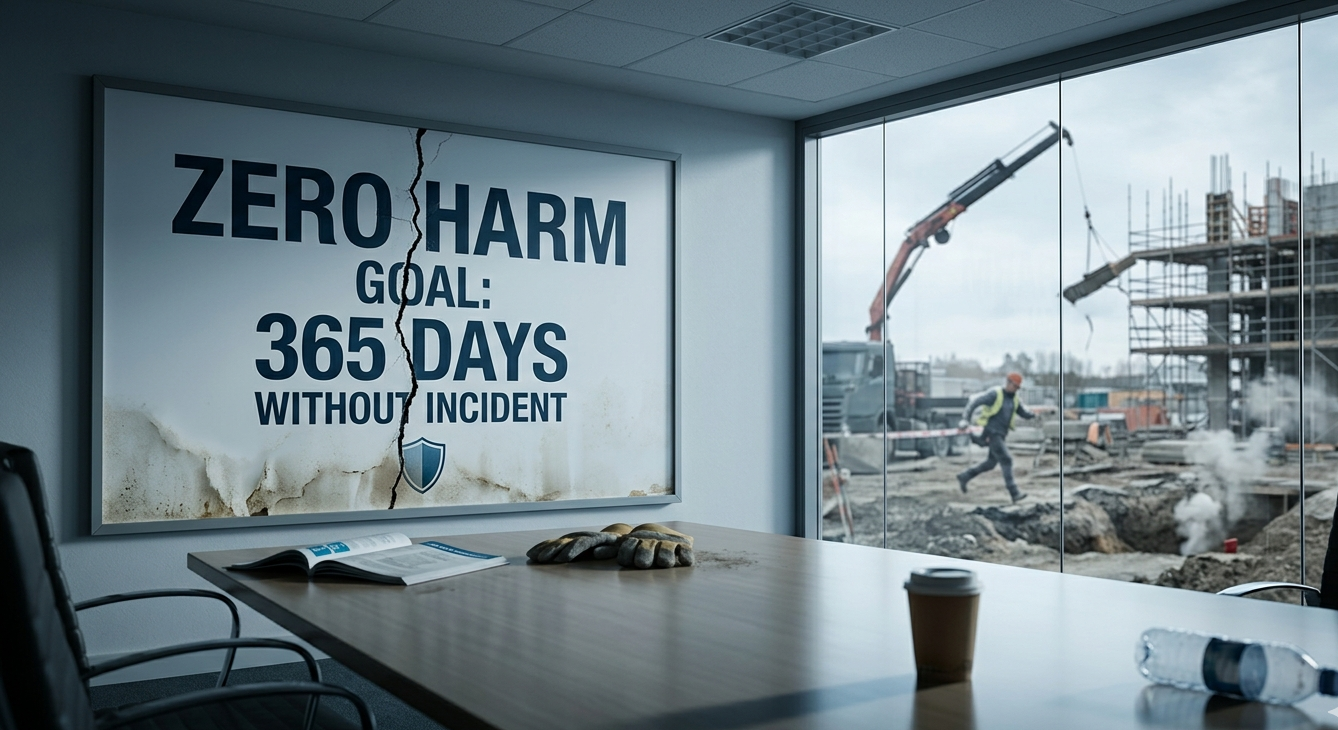
This raises an uncomfortable but necessary question. Why does safety culture fail even in companies that claim to have achieved or are pursuing Zero Harm?
The answer lies not in the slogan itself, but in how it is interpreted, implemented, and lived within the organization. A safety culture is not built through statements or posters. It is shaped by behaviors, decisions, leadership actions, and the everyday realities of the workplace. When there is a disconnect between what is said and what is done, even the most ambitious safety vision can lose its meaning.
The Ideal of Zero Harm
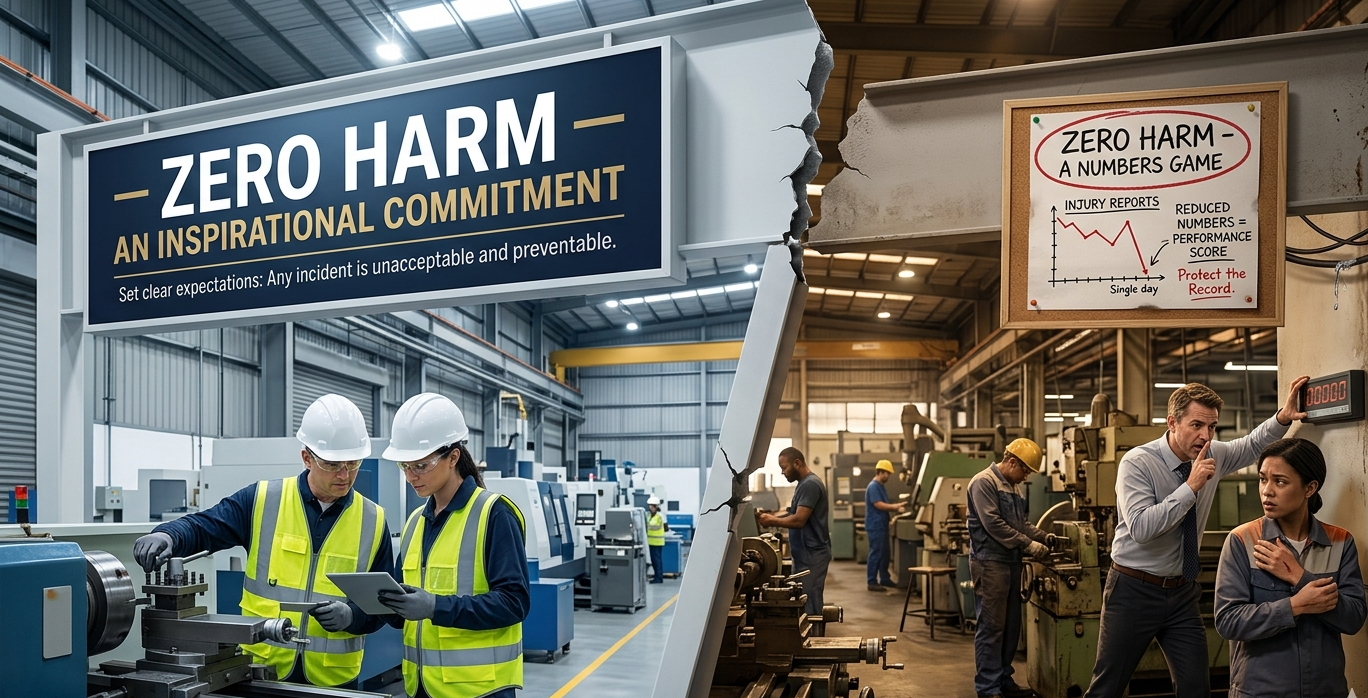
Zero Harm is intended to inspire. It is meant to set a clear expectation that any incident is unacceptable and preventable. It encourages organizations to move beyond compliance and aim for excellence.
However, the concept becomes problematic when it is treated as a target rather than a philosophy. When Zero Harm is reduced to numbers and metrics, it shifts from being a guiding principle to a performance pressure. Employees may begin to feel that reporting incidents threatens the organization’s image rather than improves its safety.
In such environments, the focus subtly changes from preventing harm to protecting the Zero Harm record.
The Illusion of a Strong Safety Culture
A company may appear to have a strong safety culture. It may have detailed procedures, regular audits, visible signage, and impressive statistics. Yet beneath this surface, there can be hidden weaknesses.
A true safety culture is not measured by the absence of reported incidents. It is measured by the presence of trust, openness, and accountability. When workers hesitate to speak up, when supervisors prioritize production over safety, or when near misses go unreported, the culture is not as strong as it seems.
The illusion of safety can be more dangerous than obvious risk because it creates a false sense of security.
The Problem with Lagging Indicators
Many Zero Harm organizations rely heavily on lagging indicators such as lost time injury rates. While these metrics are useful, they only reflect what has already happened. They do not reveal the underlying risks that could lead to future incidents.
When leadership focuses too much on maintaining a perfect record, it can unintentionally discourage transparency. Workers may choose not to report minor injuries or unsafe conditions because they do not want to “spoil the numbers.”
This creates a dangerous gap between reported performance and actual risk exposure.
The Pressure to Maintain Perfection
In a Zero Harm environment, perfection becomes the expectation. While this may sound positive, it can lead to unintended consequences. Employees may feel that mistakes are unacceptable, which reduces learning opportunities.
Instead of openly discussing failures, teams may hide them. Instead of investigating root causes, they may look for quick fixes that protect the organization’s image.
Over time, this erodes trust and weakens the foundation of safety culture.
What Leaders Say Versus What They Do
Leadership plays a critical role in shaping safety culture. Employees closely observe not just what leaders say, but what they prioritize through their actions.
If leaders speak about safety but reward productivity above all else, the message becomes clear. Production matters more than safety. This inconsistency creates confusion and undermines credibility.
A strong safety culture requires alignment between words and actions. Leaders must demonstrate that safety is truly non negotiable.
The Visibility Gap
In many organizations, senior leaders are removed from daily operations. They may rely on reports and dashboards to understand safety performance, but these tools do not capture the full picture.
Without regular engagement with frontline workers, leaders may miss critical insights. They may not see the shortcuts being taken, the pressures being felt, or the risks being ignored.
This gap between leadership perception and operational reality is a major reason why safety culture fails.
Understanding Human Behavior
Human factors play a significant role in safety performance. People do not always act in accordance with procedures. They make decisions based on experience, pressure, fatigue, and environmental conditions.
In Zero Harm organizations, there is sometimes an unrealistic expectation that workers will always follow rules perfectly. When incidents occur, the focus often shifts to blaming individuals rather than understanding the system.
This approach ignores the complexity of human behavior and limits the effectiveness of corrective actions.
Normalization of Deviance
Over time, unsafe practices can become normalized. When workers repeatedly take shortcuts without immediate consequences, those behaviors begin to feel acceptable.
In a Zero Harm environment, this normalization may go unnoticed because there are no reported incidents. However, the risk continues to grow until a serious event occurs.
Recognizing and addressing these patterns is essential for sustaining a strong safety culture.
Fear of Speaking Up
Open communication is a cornerstone of safety culture. Workers must feel comfortable reporting hazards, near misses, and concerns without fear of punishment.
In some Zero Harm organizations, the emphasis on maintaining a perfect record creates fear. Employees may worry that reporting issues will lead to blame or disciplinary action.
This fear silences valuable information and prevents proactive risk management.
Ineffective Feedback Loops
Even when workers do report issues, the response they receive matters. If concerns are ignored, delayed, or poorly addressed, trust is lost.
Employees begin to feel that speaking up is pointless. As a result, communication breaks down, and risks remain unaddressed.
A strong safety culture requires not only listening, but acting on feedback in a timely and meaningful way.
The Limits of Documentation
Procedures and systems are essential for managing safety, but they are not enough on their own. In many Zero Harm organizations, there is an over reliance on documentation.
The assumption is that if a procedure exists, it will be followed. However, real work conditions often differ from what is written on paper.
Workers may adapt procedures to fit the situation, especially under time pressure. If these adaptations are not understood and managed, they can introduce new risks.
Work as Imagined Versus Work as Done
There is often a gap between how work is imagined by planners and how it is actually performed in the field. This gap is a key source of safety culture failure.
Understanding real work practices requires direct engagement with workers. It involves observing tasks, asking questions, and learning from experience.
Bridging this gap is essential for creating practical and effective safety systems.
Production Versus Safety
In high demand environments, production pressure can overshadow safety priorities. Deadlines, targets, and financial goals create stress that influences decision making.
Even in Zero Harm organizations, workers may feel compelled to take risks to meet expectations. This is especially true when safety is seen as slowing down progress.
Balancing productivity and safety requires clear priorities and consistent leadership support.
Resource Constraints
Limited resources can also impact safety culture. When there are not enough people, tools, or time, corners may be cut.
Zero Harm messaging alone cannot overcome these practical challenges. Organizations must ensure that adequate resources are available to support safe work.
Without this support, safety culture cannot be sustained.
Superficial Investigations
Incident investigations are intended to identify root causes and prevent recurrence. However, in some organizations, investigations focus on immediate causes rather than deeper issues.
This leads to repeated incidents because the underlying problems are not addressed.
A strong safety culture requires thorough analysis and a willingness to challenge existing assumptions.
Failure to Share Lessons
Even when valuable lessons are identified, they are not always shared effectively. Information may remain within a single team or location.
To prevent repeat incidents, organizations must ensure that learning is communicated across all levels. This requires structured processes and active engagement.
Moving Beyond Zero Harm as a Slogan
Zero Harm should be treated as a vision, not a metric. It should guide decision making and inspire continuous improvement.
Organizations must focus on creating an environment where safety is embedded in everyday actions, not just reported outcomes.

Building Trust and Transparency
Trust is the foundation of safety culture. Workers must feel confident that they can speak up without negative consequences.
This requires consistent leadership behavior, fair treatment, and open communication.
Focusing on Learning and Improvement
A strong safety culture embraces learning. It recognizes that mistakes are opportunities to improve systems and processes.
By focusing on continuous improvement rather than perfection, organizations can build resilience and prevent future incidents.

Conclusion
Safety culture does not fail because of a lack of intention. It fails because of gaps between intention and reality. Even in Zero Harm companies, these gaps can exist in leadership, communication, systems, and human behavior.
Achieving a strong safety culture requires more than setting ambitious goals. It requires honesty, consistency, and a deep understanding of how work is actually performed.
When organizations move beyond slogans and focus on genuine engagement, learning, and accountability, they can transform their safety culture into something real and sustainable.
Zero Harm then becomes not just a statement, but a lived experience across every level of the organization.